
What is Spyware? How Unseen Malware Threatens Your Digital Privacy

Understanding Spyware: How Invisible Surveillance Threats Work

In the modern digital landscape, data has become the world’s most valuable commodity. While cyber threats such as ransomware announce their presence loudly by locking files and demanding payments, a far more stealthy category of malware works entirely in the shadows: spyware. Designed specifically to infiltrate personal devices, record user habits, and siphon away sensitive intelligence, spyware operates under a strict rule of zero visibility. Understanding how this silent software functions is essential for maintaining personal digital security.

Defining Spyware: The Silent Observer

Spyware is a umbrella term for malicious software created to covertly gather information from a computer, smartphone, or tablet without the user’s explicit consent or knowledge. Unlike traditional viruses that aim to corrupt operating system files, or trojans meant to create system backdoors, the primary objective of spyware is unauthorized intelligence gathering.

Once deployed on an endpoint, spyware runs continuously in the background, consuming minimal system resources to avoid raising suspicion. It carefully monitors user behavior, harvests stored credentials, tracks web activity, and transmits this sensitive telemetry back to remote Command and Control (C2) servers managed by cybercriminals, rogue advertisers, or unauthorized surveillance actors.
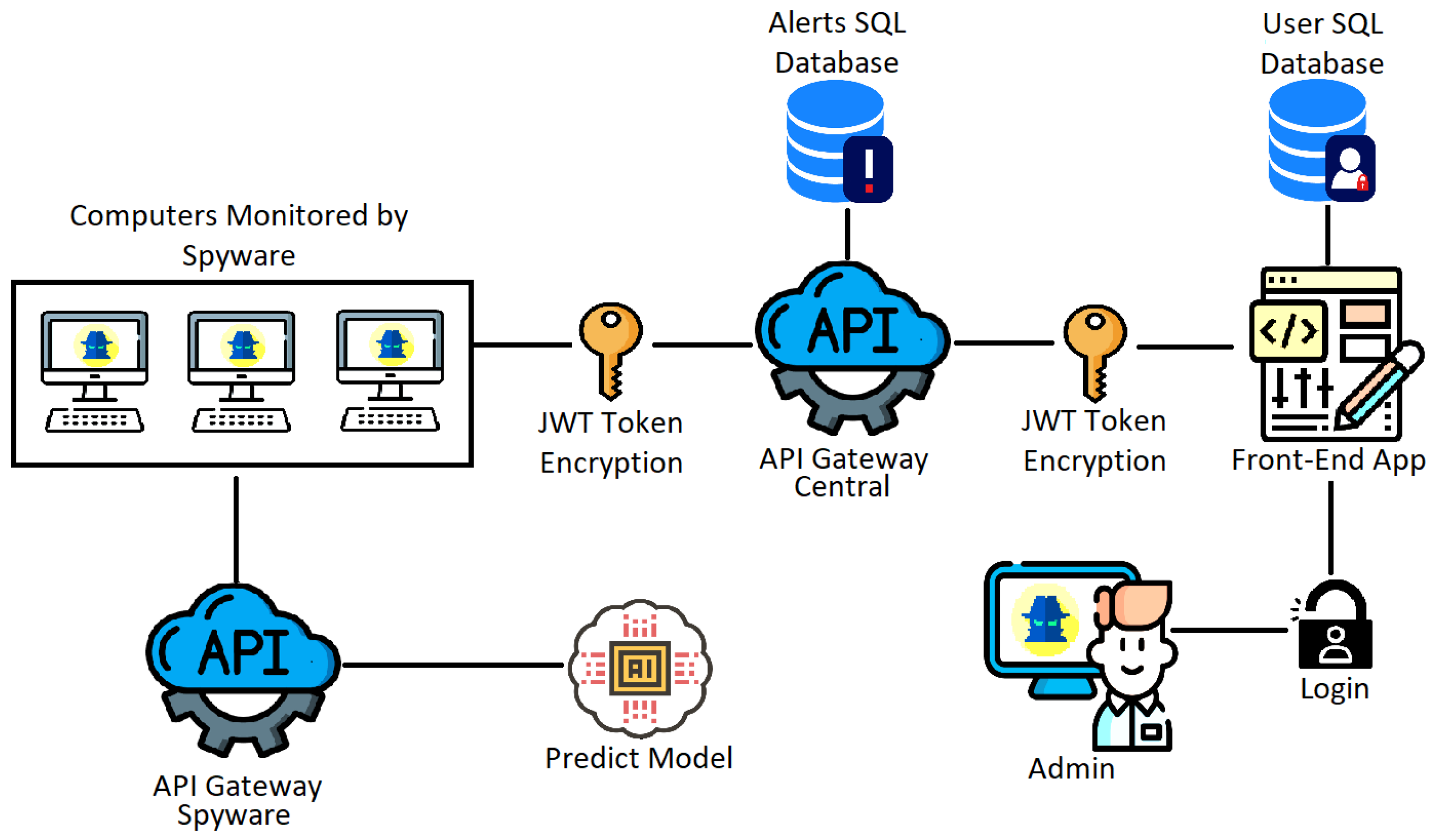
Architecture diagram of spyware monitoring endpoints and communicating with centralized API gateways
Figure 1: Typical architecture showing how spyware monitors infected endpoints and exfiltrates gathered data through secure API gateways to remote control databases.

How Spyware Operates: The Attack Lifecycle

To fully grasp how spyware compromises an endpoint, it helps to analyze its operational lifecycle. While individual variants employ different tactics, most infections follow a distinct four-stage process:

1. Infiltration and Delivery

Spyware rarely relies on forceful entry; instead, it manipulates human trust through social engineering. Common infection vectors include:

  • Phishing Email Attachments: Malicious PDF or Office documents containing hidden scripts that execute upon opening.
  • Software Bundling (“PUPs”): Potentially Unwanted Programs disguised as free utilities, PDF converters, or video players that install spyware silently alongside the main application.
  • Drive-By Downloads: Exploiting unpatched browser vulnerabilities when a user simply visits an infected or compromised website.
  • Malicious Mobile Apps: Third-party mobile application packages (APKs) that request excessive system permissions (e.g., camera, microphone, SMS read access).

2. Stealth Installation and Persistence

Once inside, spyware establishes persistence within the host operating system. It registers malicious processes to run automatically every time the device boots up. To stay hidden, it disguises executable names as critical system services (such as svchost.exe on Windows or system daemons on macOS/Linux) and suppresses any error dialogs that might alert the user.

3. Data Harvesting

With persistence established, the payload activates its data gathering modules. Depending on the software’s objective, it begins recording key inputs, scraping browser caches, capturing screen snapshots, or activating integrated peripherals like webcams and ambient microphones.

4. Exfiltration

Gathered data is encrypted and staged locally before being silently uploaded to the attacker’s server. To avoid network detection tools, exfiltration often takes place during off-peak hours or leverages standard web protocols (such as HTTPS POST requests) so the data traffic blends seamlessly with normal web traffic.

Diagram showing the stages of keylogger spyware from Trojan infection to exfiltration
Figure 2: The multi-stage progression of keylogging spyware, from initial Trojan delivery to command-and-control credential exfiltration.

Primary Categories of Spyware

Spyware is not a single, uniform tool. It encompasses various specialized malware families designed for distinct surveillance tasks:

Category Primary Function Targeted Information
Keyloggers Intercepts and logs physical hardware and virtual keyboard inputs. Passwords, credit card details, private messages, account pins.
Infostealers Scans local drives and browsers for saved data caches. Autofill data, crypto wallet keys, session cookies, system specs.
Banking Trojans Injects fake overlay forms over legitimate financial applications. Online banking credentials, two-factor authentication codes.
Adware / Tracking Cookies Tracks online browsing habits to serve invasive targeted ads. Search queries, shopping interests, demographic location markers.
Stalkerware Monitors personal smartphone communications and physical locations. GPS coordinates, phone call recordings, messaging apps (WhatsApp, SMS).

Warning Signs of a Spyware Infection

Because spyware prioritizes stealth, detecting it requires paying close attention to minor system anomalies. Common indicators include:

  • Unexplained System Sluggishness: High CPU or RAM utilization caused by background logging processes.
  • Rapid Battery Drain: Mobile devices losing power quickly due to persistent GPS tracking and cellular data transmission.
  • Browser Hijacking: Unwanted changes to your default search engine, home page, or newly installed browser toolbars.
  • Surge in Network Usage: Unexpected spikes in background data consumption, indicating active file uploading.
  • Pop-up Advertisements: Frequent, aggressive pop-ups appearing even when disconnected from active browser sessions.

Essential Defensive Strategies

Protecting your system against spyware requires a multi-layered approach combining modern software security tools with sound security practices:

  1. Keep Software Updated: Regularly install operating system and browser updates to patch security vulnerabilities exploited by spyware.
  2. Enable Multi-Factor Authentication (MFA): MFA ensures that even if a keylogger steals your password, attackers cannot access your accounts without secondary verification.
  3. Use Real-Time Antivirus/EDR Protection: Deploy reputably sourced security suites capable of behavioral monitoring to intercept unauthorized background tasks.
  4. Review Application Permissions: Regularly inspect app permissions on smartphones and revoke unnecessary access to cameras, microphones, or location services.
  5. Practice Cautious Browsing: Never download attachments from unknown senders, and avoid installing software from unofficial third-party app stores.

Conclusion

Spyware represents one of the most pervasive threats to modern digital privacy. By operating silently, it exploits user trust to systematically dismantle online confidentiality. However, by understanding the mechanics of how spyware infiltrates systems and maintaining disciplined security habits, users can effectively safeguard their devices, credentials, and personal privacy from silent online surveillance.

What is Doxing? The Complete Blueprint to Understanding and Preventing Targeted Data Attacks

🛡️ Cyber Security & Privacy Infrastructure

In an era where data aggregates relentlessly, malicious actors can turn your forgotten digital breadcrumbs into a weapon. Learn the architecture of doxing and how to lock down your private perimeter.

The modern digital landscape operates on an unprecedented accumulation of personal telemetry. Every transaction, social interaction, network request, and platform registry leaves behind a continuous trail of metadata. For the average web user, these isolated fragments seem entirely disconnected and harmless. However, in the hands of a dedicated adversary, internet troll, or hacktivist group, these individual data points can be meticulously cross-referenced to construct a lethal tactical profile that leads straight to your physical front door.

This malicious extraction methodology is known as **doxing** (frequently spelled *doxxing*). It represents one of the most structurally invasive threats to personal safety in contemporary cyberspace. Doxing merges advanced Open Source Intelligence (OSINT) methodologies, network traffic interception, and social engineering into a focused campaign of harassment. Unlike traditional cybersecurity breaches designed to infect infrastructure via malicious software payloads (commonly referred to as malware) or hijack financial instruments, doxing targets the victim’s physical and psychological autonomy, systematically destroying their professional reputation, personal relationships, and baseline sense of security.

The Architecture of Doxing: Correlating Disparate Vectors

EXIF Image Metadata Historical Forum Archives Leaked Data Repositories Social Graph Mapping Aggregated Identity Profile

1. Etymology and the Evolution of Modern Doxing

The terminology originates within the underground hacker subcultures of the 1990s. In early chat relays and network nodes, the phrase *”dropping dox”* (a truncation of the word *documents*) referred to an aggressive retaliatory action deployed against rival operators. If an anonymous user violated the unwritten codes of a specific hacker collective, an adversary would systematically unearth their real-world administrative documents, tax records, or legal identities and post them publicly to strip away their anonymity.

In the decades since, doxing has expanded far beyond localized hacker feuds, transforming into a mainstream weapon utilized in political polarization, online gaming vendettas, ideological cancel culture, and extortion schemes. The threat actor’s objective is rarely immediate financial monetization. Instead, they seek to induce maximum real-world distress, intimidation, public humiliation, or professional ruin. The typical telemetry exposed during a comprehensive doxing vector includes:

  • Legal names, national identification metrics, and birth registry details;
  • Verified residential physical addresses and geolocation tracking profiles;
  • Private cellular telecommunication lines and direct personal email routing;
  • Corporate employment logs, direct reporting structures, and professional physical locations;
  • Identities, school locations, and workplace details of direct relatives, partners, and dependents;
  • Unencrypted personal correspondence, court histories, or structural financial health metrics.

2. Reconnaissance Frameworks: How Attackers Extract Your Identity

A pervasive misconception regarding digital target selection is that an attacker must execute sophisticated network intrusion vectors or reverse-engineer advanced encryption algorithms to expose a victim. In reality, the vast majority of actionable intelligence is gathered utilizing **OSINT** (Open Source Intelligence) protocols. Doxers operate as highly analytical pattern correlation actors who leverage entirely public, unshielded internet interfaces:

Social Media Graph Exploitation

Public social profiles represent a goldmine of unmanaged metadata. A user posting a celebratory image of a new corporate promotion unintentionally reveals their exact working hours and company campus location. A photograph showcasing a new vehicle might inadvertently capture a localized residential parking permit or license plate asset. By aggregating five to ten years of fragmented updates across different platforms, an attacker can construct a deterministic timeline mapping your daily geographic routines, lifestyle habits, and core affinity networks.

Commercial Data Brokers and Public Registries

Data brokers operate massive commercial extraction warehouses that legally aggregate voter registration records, property deeds, court dockets, and consumer purchasing habits. In many jurisdictions, if an individual registers a small business or LLC, their corporate filing addresses become public records accessible via government databases. Attackers utilize commercial search platforms to query these registries, purchasing comprehensive background profiles that link digital handles directly to verified physical infrastructure.

Cross-Referencing Historic Credential Leaks

Billions of plain-text passwords and emails reside in dark-web repositories following historical corporate data breaches. If an adversary isolates a persistent username or email address you used on a forgotten forum a decade ago, they can query breach engines to isolate the associated registration variables. If that old database entry contains your real name, birth date, or a password you still reuse across contemporary nodes, your modern perimeter is immediately compromised.

The Cascading Real-World Consequences of a Doxing Event

1. Aggregation & Leak Private address, phone, and employer broadcasted. 2. Target Amplification Swatting threats launched; relentless endpoint spam. 3. Real-World Fallout Reputation destabilized; severe professional disruption.

3. Strategic Hardening: 7 Tactical Protocols for Digital Defense

Mitigating the risk of doxing requires establishing deliberate **digital hygiene architectures**. While completely extracting yourself from the global internet framework is functionally impossible, you can structurally minimize your adversarial exposure surface, rendering the cost of target reconnaissance prohibitively high for a standard threat actor. Execute these core hardening protocols:

Protocol 1: Audit and Isolate Social Graph Visibility

Restrict all social matrix platforms to the maximum available privacy configuration. Transition profiles on Facebook, Instagram, and TikTok away from public visibility to restricted status. Limit the algorithmic reach of historical publications exclusively to verified primary connections. Routinely clean your list of connections to purge unverified or legacy digital avatars, which are frequently deployed as adversarial monitoring assets.

Protocol 2: Mask Network Metadata and Geographic Routing

Every network transaction you execute implicitly broadcasts your public IP address to the receiving server architecture. This allocation leaks your service provider data and approximate coordinates. When interacting on open peer-to-peer (P2P) gaming networks, communication servers, or public platforms, this identifier can be harvested to launch targeted infrastructure disruptions or geographic correlation tracking.

Shield Your Network Routing Metadata

The baseline layer of defensive doxing mitigation requires masking your true network origin. Read our rigorously verified engineering analysis to encrypt your data transfers and proxy your public routing footprint.

🛡️ Conceal Your Network Origin: Best VPN Analysis

Protocol 3: Enforce Absolute Identity Compartmentalization

Never maintain matching handles, pseudonyms, or avatars across structurally distinct web ecosystems. If the specific alias you use for recreational gaming matches your corporate LinkedIn profile, your identity layer is broken. Maintain entirely separate email communication addresses: an isolated tier for legal and banking infrastructure, a secondary layer for verified social networks, and a revolving, anonymous third category for arbitrary service sign-ups.

Protocol 4: Execute Data Broker Opt-Out Programs

Query your real-world identity metrics inside primary search index engines using quotation boundaries to isolate where your address and phone number are exposed. Utilize regulatory frameworks like GDPR or CCPA to submit official Right to Erasure requests directly to known data aggregation clearinghouses. For continuous management, employ automated data scrubbing services that send recurring opt-out directives to broker networks on your behalf.

Protocol 5: Strip EXIF Asset Metadata

Mobile cameras embed internal structural data arrays directly into image file wrappers. These Exchangeable Image File Format (EXIF) strings document precise GPS coordinate arrays mapping exactly where the file was written. If you upload a raw image directly to an unmanaged forum or repository, anyone can extract the coordinate matrix. Disable application-level geolocation authorization parameters inside your mobile operating system settings, or scrub files utilizing specialized metadata removal software before uploading.

Protocol 6: Implement High-Entropy Passwords and Hardware 2FA

If an attacker compromises a secondary digital account through a basic credential reuse vector, they immediately inherit access to all historical chats and private details stored inside that platform. Deploy an encrypted password manager to generate distinct, complex character collections for every digital endpoint. Furthermore, activate Multi-Factor Authentication (MFA) across all services, prioritizing app-based hardware tokens over insecure SMS configurations.

Protocol 7: Neutralize Inbound Social Engineering Attacks

Attackers frequently deploy focused phishing or vishing vectors once they unearth baseline telemetry like your name and cell number. They may call pretending to be network engineers, shipping couriers, or banking representatives to coax you into revealing missing data points (such as your full billing address). Always apply a zero-trust model to unverified inbound communications. Never click embedded text linkages or disclose identity fragments over an unverified voice connection.

4. Incident Management: Crisis Response Frameworks

If your digital perimeter is breached and your private data is leaked online, executing a structured incident response sequence is critical to containing the damage. Panic will compromise your operational security. Swiftly follow these tactical containment steps:

  1. Document the Breach: Before attempting to remove any exposed data, compile comprehensive forensic evidence. Capture high-resolution screenshots of the adversarial posts, ensuring that full URL routing strings, target timestamps, and the attacker’s account handles are completely legible. This evidence is necessary for law enforcement investigations.
  2. Initiate Takedown Requests: Most mainstream host servers and social networks strictly prohibit the publication of private identifying information under their Terms of Service. Submit urgent abuse tickets containing your forensic documentation directly to platform moderators to quickly take down the offending threads.
  3. Harden Financial Instruments: If sensitive metrics like tax data or banking routing tokens are exposed, notify your financial providers immediately. Place fraud alerts on your credit files to prevent unauthorized actors from attempting to open fraudulent accounts in your name.
  4. Engage Law Enforcement Authorities: Doxing frequently violates local criminal statutes concerning cyberstalking, harassment, and unauthorized data exploitation. File an official complaint with your local cybercrime division, providing the forensic evidence you gathered.
  5. Alert Support Networks and Employers: Threat actors often send distorted or malicious packages to a victim’s workplace or family network to damage their reputation. Proactively briefing your human resources department and close family about the cyberattack will neutralize the element of surprise.

Proactive Awareness as the Ultimate Shield

Doxing is a stark reminder that the boundary between our physical and digital lives has completely evaporated. The information we casually broadcast across the internet can be aggregated and turned against us if left unmanaged.

However, building an effective defense does not require disconnecting from modern digital life. Instead, it demands proactive, continuous management of your digital footprint. By establishing strict identity isolation, masking your network routing metadata, scrubbing asset variables, and maintaining excellent credential hygiene, you can sharply increase the difficulty of adversarial target acquisition. Take command of your data parameters, secure your architecture, and navigate the web with total peace of mind.

How to Change Your IP Address: 7 Proven Methods Explained Step-by-Step

🌐 Network Configuration & Anonymity

Whether you want to bypass geo-restrictions, escape tracking, or fix network conflicts, here is your ultimate blueprint for altering your digital location.

Every time you connect to the internet, your device is assigned a unique digital label known as an Internet Protocol (IP) address. This address acts like a return shipping label on a package, ensuring that the websites, videos, and data packets you request find their way back to your specific router or smartphone. However, because this protocol broadcasts your approximate geographical position and internet service provider (ISP) identity to every server you touch, it can easily be used to track your movements, enforce regional censorship, or implement aggressive digital profiling.

Learning how to alter your network parameters is one of the most practical skills you can acquire to protect your online privacy and troubleshoot configuration errors. Changing this configuration allows you to mask your physical location, protect your personal identity from tracker arrays, circumvent strict regional content blocks, and reset faulty hardware assignments. Below, we break down the seven most reliable strategies to modify your digital location, ranging from instant automated software solutions to advanced manual command-line techniques.

The Mechanics of a Routed Network Change

Your Device Direct ISP Proxy/VPN Target Site ❌ Real IP Exposed (e.g., 85.221.X.X) ✅ Virtual IP Assigned (e.g., 45.12.X.X)

1. Use a Premium Virtual Private Network (VPN)

Deploying a Virtual Private Network is the easiest, safest, and most effective way to change your public identity string. A VPN works by creating an encrypted cryptographic tunnel between your local operating system and an external physical server managed by the provider. The moment the connection is established, your system stops communicating directly with target websites. Instead, all data passes through the encrypted tunnel, meaning target platforms can only see the proxy location of the selected server node.

Step-by-Step Implementation:

  1. Select an audited, strict no-logs provider (such as NordVPN, ExpressVPN, or Surfshark).
  2. Download and install the official client application designed for your operating system (Windows, macOS, Android, or iOS).
  3. Launch the application and authenticate using your premium credentials.
  4. Browse the global server map and click on your desired geographic destination (e.g., the United States or Japan).
  5. Wait a moment for the interface connection ring to turn green. Your machine now uses a brand-new, fully encrypted virtual identification layer.

2. Configure a Secure Proxy Server

Like a VPN, a proxy server acts as a middleman between your web browser and the internet. When you configure a proxy configuration, inbound and outbound traffic routes directly through that specific node. The primary difference is that standard proxy setups lack advanced end-to-end data encryption tunnels. This makes them ideal for quickly changing your location parameters to scrape data or bypass regional website access filters, though they are less suited for high-level security tasks.

Step-by-Step Implementation (Windows 11):

  1. Obtain a verified, high-quality proxy address string along with its corresponding port number (e.g., `192.0.2.1:8080`).
  2. Open your operating system Settings panel and click on Network & internet.
  3. Scroll down and select the Proxy sub-menu tab.
  4. Locate the Manual proxy setup module and click the Set up or Edit option.
  5. Toggle the configuration switch to On, enter the numerical IP proxy string and port details into the designated fields, and click Save.

3. Force a Dynamic IP Refresh via Power Cycling

Most consumer internet service providers assign residential connections a **dynamic IP address**. Unlike static allocations, dynamic strings are loaned out for a set period called a DHCP lease time. When this lease expires, or when a router disconnects from the network, the ISP’s automated systems return that string to the public pool and assign a new one to your connection. You can manually trigger this process by completely power cycling your home routing hardware.

Step-by-Step Implementation:

  1. Locate the primary power cable connected to your home modem or internet routing gateway.
  2. Unplug the power brick directly from the wall socket. **Do not** simply tap the basic standby button.
  3. Leave the hardware completely unpowered for at least 5 to 10 minutes. This gives your ISP’s central server time to mark your lease as abandoned.
  4. Plug the power cable back into the wall socket and wait for the status lights to turn solid green.
  5. Check your system status using an online lookup tool to confirm your ISP has assigned you a new public address.

Windows Command Prompt DHCP Refresh Sequence

C:\Windows\system32> ipconfig /release
[Ethernet adapter parameters cleared. Active connection severed temporarily…]

C:\Windows\system32> ipconfig /renew
[Connecting to local DHCP service architecture…]
Connection successful! New IPv4 address parameters assigned:
IPv4 Address. . . . . . . . . . . : 192.168.1.142

4. Manually Reassign a Local Static Address

If you are troubleshooting an “IP Address Conflict” error on your office network, changing your **internal local network parameters** is often the quickest fix. This configuration adjusts the private address used to communicate with your local router, rather than your external public identifier. Manually picking an unused parameter within your router’s subnet range resolves these addressing conflicts instantly.

Step-by-Step Implementation (via Windows Command Line):

  1. Type cmd into the system taskbar search field, right-click **Command Prompt**, and choose **Run as administrator**.
  2. Type the following command sequence exactly to sever your current DHCP lease:
    ipconfig /release
  3. Press Enter. Your active internet connection will temporarily disconnect.
  4. Type the following command to query your gateway router and request a new local address:
    ipconfig /renew
  5. Press Enter. The interface will display a newly updated private IPv4 address allocation block in a few seconds.

5. Leverage The Tor Onion Routing Network

For high-level digital anonymity, routing your traffic through the Tor (The Onion Router) network is a highly secure option. Developed to protect classified communications, Tor works by bouncing your connection through three separate, randomized volunteer-run servers known as relays. Each relay strips away a layer of routing data before forwarding the traffic. By the time your request reaches a website from the final “exit node,” your original public identifier is completely untraceable.

Step-by-Step Implementation:

  1. Navigate to the official project landing page at torproject.org.
  2. Download the secure software binaries configured for your host computer.
  3. Execute the installation file and launch the specialized **Tor Browser**.
  4. Click the prominent Connect button on the initial dashboard to initialize the multi-layered relay sequence.
  5. Your internet session is now secure. To change your location again at any time, click the sandwich menu icon and select New Onion Circuit for this Site.

6. Connect to a Mobile Carrier Cellular Gateway

Mobile cellular networks process data routing completely differently than residential landline providers. Cellular carriers use an architecture called Carrier-Grade NAT (CGNAT), which groups thousands of individual smartphones under a shared public IP address block. Every time a mobile device toggles its cellular radio chip on and off, it is reassigned to a completely different part of this massive shared pool.

Step-by-Step Implementation:

  1. Disconnect your smartphone from your home Wi-Fi network so it relies entirely on cellular data (LTE/5G).
  2. Swipe down to open your device’s control center and tap the **Airplane Mode** icon to turn it on.
  3. Wait roughly 15 to 30 seconds for all active connections to the cellular tower to drop completely.
  4. Tap the **Airplane Mode** icon again to turn it off, forcing your phone to reconnect to the nearest cell tower.
  5. If you need to change the location on your laptop or desktop, simply turn on your smartphone’s **Mobile Hotspot** feature and connect your computer to it.

7. Request a Manual Assignment Change From Your ISP

If you are dealing with a permanent network block, severe routing issues, or a targeted cyberattack, your best option may be to contact your internet service provider directly. If your home connection uses a sticky dynamic system or a fixed static allocation, your ISP’s network engineers can manually update the MAC address bindings on their servers to give your home modem a brand-new public identifier.

Step-by-Step Implementation:

  1. Locate your customer account number on a recent internet bill or service statement.
  2. Call your ISP’s technical support line and ask to speak with an advanced tier-2 network representative.
  3. Explain that you are dealing with critical network configuration issues or facing security concerns that require a new IP assignment.
  4. Follow the support specialist’s instructions, which typically involve leaving your modem powered off while they manually update your system parameters from their dashboard.

Method Comparison Matrix

Every method for altering your digital location serves different needs. Use the quick reference table below to pick the best strategy for your specific technical goals:

Method Complexity Anonymity Tier Best Used For
1. Premium VPN Very Low Excellent (Encrypted) Bypassing geo-blocks & protecting privacy
2. Secure Proxy Medium Moderate (No Encryption) Web scraping & light browser spoofing
3. Power Cycling Low Minimal Refreshing a faulty home network connection
4. CMD Command Line Medium None (Internal Only) Resolving local network IP conflicts
5. Tor Browser Low Maximum (Three Relays) High-level investigative anonymity

Choosing The Right Method For Your Needs

Modifying your IP parameters is not a one-size-fits-all task. If you need a fast solution to resolve a local network conflict, running a quick command-line refresh or power cycling your router is usually the best approach. However, if your goal is to bypass global geo-restrictions, escape tracking, or secure your data on public Wi-Fi networks, using a premium VPN or the Tor browser is essential. Take control of your network settings, protect your digital footprint, and enjoy a safer, unrestricted web experience.

What is Malware? The Comprehensive Guide to Threat Types and Digital Protection

🚨 Cyber Threat Intelligence Report

Malicious software changes its digital face every day. Learn how to identify modern infections, analyze attack vectors, and build a fortress around your systems.

The global digital ecosystem relies on interconnected software pipelines, cloud databases, and lightning-fast networks. While this connectivity makes life incredibly convenient, it also opens up massive opportunities for cyberattacks. The most common tool used in these attacks is **malware**. Short for “malicious software,” malware is an umbrella term used to describe any code, script, or program designed to secretly infect computers, servers, mobile devices, or network infrastructures without the owner’s explicit consent.

The era of simple, annoying desktop jokes written by curious teenagers is long gone. Modern malware has evolved into a highly professional, multi-billion-dollar global industry. Organized cybercrime syndicates, state-sponsored hacking groups, and lone actors deploy sophisticated malicious software to steal financial assets, harvest corporate secrets, monitor human behavior, and hold critical public infrastructure hostage. Understanding how these tools operate is the first step toward staying safe online.

The Core Mechanics of a Malware Infection Cycle

1. Delivery Phishing Email, Unpatched Exploit 2. Execution User runs macro, script bypasses OS 3. Persistence Modifies registry, hides in background 4. Payload Locks target files, exfiltrates credit cards

1. The Core Types of Malware Threat Variants

Malware is not uniform; different strains are built with entirely different behaviors, targets, and goals. To properly defend your digital parameters, you must know what these different threats look like:

Ransomware

Ransomware is one of the most visible and dangerous threats today. Once inside a system, it silently runs cryptographic operations to lock your most valuable documents, database partitions, and family photos behind high-grade encryption keys. When it finishes encryption, it drops a text message on your desktop demanding hard-to-trace cryptocurrency payments in exchange for the decryption tool. Advanced versions also steal your files before locking them, threatening to leak sensitive data online if you refuse to pay.

Spyware and Keyloggers

Spyware is built to be invisible. Instead of disrupting your operating system, it hides in background system workflows to silently watch what you do. Keyloggers, a specialized type of spyware, record every single keystroke you type on your physical keyboard. This lets attackers harvest bank login credentials, email passwords, and personal messages before transmitting them back to their control servers.

Trojans

Named after the legendary wooden horse of ancient Greece, a Trojan horse program relies entirely on deception. It presents itself as completely legitimate software—such as a free utility download, a game patch, or a media player update. Once you run the installer, the program drops its hidden malicious payload into your operating system, often setting up a secret backdoor that gives hackers complete remote control over your machine.

Adware and Bloatware

While less destructive than ransomware, adware severely degrades your digital experience. It forces your system browsers to load invasive pop-up ads, changes your default search engines without permission, and tracks your web browsing habits. This data is used to serve targeted advertisements or sold directly to shady tracking agencies.

2. Common Infection Vectors: How Malware Seeps Into Systems

Malware cannot infect a machine unless it finds a point of entry. Hacking groups rely on a few common methods to break through security perimeters. The primary tool remains **social engineering**, typically executed via phishing campaigns. These emails impersonate trusted brands, shipping organizations, or work colleagues, convincing you to open infected attachments (like macro-enabled spreadsheets) or click links that lead to drive-by download exploits.

Another dangerous entry point is **unpatched software vulnerabilities**. Operating systems and apps contain millions of lines of code, and developers occasionally make mistakes that leave security holes. Cybercriminals actively look for these flaws to inject malicious code directly into vulnerable systems over the network—requiring zero interaction from the victim.

Modern Endpoint Defense Layering Architecture

Your OS Signature Match Heuristic Engine Network Sandbox Threat Package

3. A Multi-Layered Defense Blueprint

Relying on a single antivirus scanner is no longer enough to protect you from modern cyber threats. True digital protection requires a **multi-layered approach** that stops attacks at different stages of the infection cycle.

  • Deploy Next-Generation Anti-Malware Tools: Legacy scanners only look for static file signatures. Modern security suites use heuristic analysis and machine learning engines to monitor application behavior in real time, letting them block completely new threats before they can execute.
  • Use a Premium, Secure VPN: A Virtual Private Network encrypts your internet traffic, preventing attackers from injecting malicious data packets when you are on unsecured public networks. Top-tier VPN networks also feature built-in threat protection layers that block malicious trackers and dangerous domains at the server level.
  • Keep All Software Updated: Enable automatic updates across your operating systems (Windows/macOS), web browsers, and core applications. Patching security vulnerabilities quickly closes the doors that network-crawling exploits rely on.
  • Practice Strict Privilege Separation: Avoid running your computer daily using an account with full administrative privileges. Use a standard user account for daily browsing tasks instead. This simple step ensures that even if malware executes, it lacks the necessary system permissions to deeply modify your registry or modify critical system areas.

Build a Defensible Digital Footprint

The threat landscape will continue to evolve as cybercriminals deploy increasingly automated tools. However, by understanding the mechanics of malware deployment, knowing the warning signs of background infections, and combining robust patch habits with advanced anti-malware security software and encrypted network layers, you can significantly reduce your risk exposure. Secure your systems, stay vigilant against social engineering tricks, and take control of your digital safety today.

The Ultimate Guide to Computer Backup: How to Secure Your Data and Prevent Total Loss

🛡️ Ultimate Data Protection Guide

Hard drives fail, ransomware strikes, and accidents happen. Learn the bulletproof strategy to clone, protect, and preserve your digital life before it is too late.

Imagine waking up tomorrow, turning on your computer, and being greeted by a flashing question mark, a blank black screen, or worse—a ransomware note demanding thousands of dollars to decrypt your files. Your family photos, tax returns, professional portfolios, and years of irreplaceable digital history vanished in a fraction of a second. This is not a hypothetical scare tactic; it is a daily reality for thousands of computer users who neglect a fundamental pillar of digital hygiene: the computer backup.

Data loss is rarely a matter of “if”—it is a matter of “when.” Mechanical hard drives wear out, Solid State Drives (SSDs) can suffer catastrophic controller failures without warning, laptops get stolen, and malware continuously evolves to bypass standard security defenses. Creating a redundant copy of your system is your only true safety net. However, simply dragging a few files onto an old USB stick is not a real backup strategy. To achieve true peace of mind, you need a systematic approach that guarantees your data survives any disaster.

Visualized: The Bulletproof 3-2-1 Backup Strategy

3 Data Copies 2 Media Types External Drive / NAS Internal Drive Primary System PC 1 Offsite (Cloud)

1. The Golden Rule of Data Protection: The 3-2-1 Strategy

If you take only one piece of advice from this blueprint, let it be this industry-standard rule utilized by enterprise IT departments worldwide. The **3-2-1 Backup Strategy** removes single points of failure from your recovery pipeline. It dictates that you must:

  • Keep at least three (3) copies of your data: This includes your primary working copy on your computer and at least two separate backups.
  • Store the copies on two (2) different types of media: Do not save both backups on the same internal storage drive. Use an external hard drive, a Network Attached Storage (NAS) enclosure, or a high-speed flash storage array alongside your primary machine.
  • Keep at least one (1) backup copy offsite: Local disasters like house fires, electrical surges, or flooding can destroy your computer and your external backup drives simultaneously if they are in the same room. An offsite backup, typically hosted securely in the cloud, guarantees survival against structural hazards.

2. Local Storage Options: Speed, Autonomy, and Control

Local backups serve as your immediate frontline defense. When an accidental file deletion occurs or a software patch corrupts your operating system, retrieving data from a locally connected source takes mere minutes, compared to downloading terabytes over an internet connection.

The most accessible entry point is an External USB Hard Drive (HDD) or Solid State Drive (SSD). HDDs provide massive storage volumes at incredibly low price points per gigabyte, making them ideal for backing up massive media folders. SSDs, while more expensive, offer blistering write speeds and lack physical moving parts, protecting them against mechanical impact damage if dropped.

For advanced households or home offices running multiple computers, a Network Attached Storage (NAS) device acts as a private cloud server. Hooked up directly to your internet router, it allows every device connected to your local network to seamlessly run automated backgrounds without requiring you to manually plug in cables every evening.

Execution Types: Image Clone vs. File Level Selection

Full System Image Clone 📦 Copies OS, Apps, Settings & Registry 📦 Allows bare-metal bootable recovery File-Level Selection 📄 Copies specific chosen directories 📄 Faster execution, lower memory load

3. Cloud Backups: The Set-and-Forget Insurance Policy

While local backups protect against hardware failure, cloud platforms shield your lifestyle against physical catastrophes and advanced cyberattacks. Modern malicious file locker software (ransomware) is smart enough to crawl your network and encrypt any locally mounted external hard drive or NAS array it discovers attached to your system. Specialized cloud storage providers circumvent this threat using version-controlled file systems.

When setting up cloud infrastructure, distinguish between **Cloud Syncing** and **Cloud Backup**. Tools like Google Drive, OneDrive, and Dropbox are synchronization utilities. If you accidentally delete a file or format a document incorrectly on your desktop, the software instantly replicates that destructive action across the web server, deleting it everywhere.

Dedicated offsite backup services (such as Backblaze, Acronis, or Carbonite) run constantly in the background, keeping historical point-in-time archives of your entire directory hierarchy. If you get compromised by ransomware, you can roll back your system clocks to a clean snapshot taken hours before the cyber attack took place.

4. Step-by-Step Guide to Automating Your First Backup

A backup plan that relies entirely on your manual memory is bound to fail eventually. The secret to digital safety lies within comprehensive automation scripts. Here is the easiest workflow to get started using built-in operating tools:

For Windows Users (File History & Backup)

  1. Connect your designated formatted external storage hard drive to an active USB socket port.
  2. Open the system console interface: Navigate to Settings > Update & Security > Backup.
  3. Click the toggle utility labeled “Add a drive” and choose your attached external hardware unit.
  4. Select “More options” to configure system execution loops. Switch the script configurations to save copies hourly or daily based on how often your data fields alter throughout standard operations.

For macOS Users (Time Machine)

  1. Plug an external clean drive partition into your Thunderbolt or USB-C terminal.
  2. A prompt dashboard should appear instantly asking if you wish to allocate this drive space to Time Machine protocols. Alternatively, head into System Settings > General > Time Machine.
  3. Toggle the button titled “Set Up Backup Disk”.
  4. Check the option box to encrypt backup volumes with private administrative security phrases, ensuring that someone cannot access your records if they physically steal your drive.

5. The Schrodinger’s Backup: Why Verification is Crucial

There is a classic IT proverb that states: *”The condition of any storage backup remains entirely unknown until you actively attempt to execute a system data restoration command.”* Thousands of casual computer owners believe they are safe because a little green status icon blinks on their screen, only to realize years down the road that their automated software crashed months ago, or that their archive files are completely corrupted.

To verify that you won’t lose your data when an actual emergency occurs, schedule a quick **restore rehearsal** at least once every quarter. Open your external storage files or cloud platform panel, select a few arbitrary folders containing complex documents or media, and execute a dry-run extraction command onto an independent directory pathway. Check to see if the files open flawlessly, confirm the formatting parameters match, and evaluate the recovery speeds.

Implement Your Digital Safety Net Today

Setting up a robust, multi-layered data architecture takes less than an hour, yet it protects thousands of hours of work, financial records, and sentimental digital assets. Do not wait for a loud clicking sound inside your PC chassis or a malware pop-up to prompt you into action. Invest in a reliable external storage hard drive, pick a highly secure cloud platform provider, automate the system execution loops, and secure your files today.

VPN Black Friday & Cyber Monday Deals 2026: The Ultimate Live Tracker

🔴 Live Updates Enabled for November 2026

Don’t overpay for digital privacy. Secure the deepest discounts, hidden coupons, and free subscription extensions on the world’s top-tier VPN networks.

The annual holiday shopping season has arrived, bringing with it the absolute best window of opportunity to purchase premium cybersecurity software. If you have been waiting all year to safeguard your digital footprint, protect your crypto transactions, or unlock global streaming catalogs without breaking the bank, this is your moment. During the Black Friday and Cyber Monday 2026 flash sales, premium VPN companies slash their retail subscription rates by up to 85% and bundle their packages with free bonus months.

Navigating this landscape can be overwhelming. Dozens of providers use aggressive countdown timers and complicated multi-year contracts to trick you into impulse buys. That is exactly why our research team at Freebies.live built this real-time tracker. We actively scrub server price matrices, verify checkout codes, and cut through the marketing noise to bring you genuine, verified savings.

Standard vs. Black Friday 2026 Pricing Trajectory

Jan-Sept: $12.95/mo Black Friday Drop: $2.19/mo 🔥 Up to 85% In Savings

Confused By All The Holiday Deals?

A cheap price tag means nothing if the software leaks your data. Check out our comprehensive, performance-tested analysis of the absolute safest networks on the market before you purchase.

👉 Read the Full Best VPN Ranking Now

The Anatomy of a Genuine Holiday VPN Deal

During sales periods, many tier-two companies engage in price manipulation. They inflate their retail monthly tiers right before November, only to apply a generic “90% off” sticker to a baseline multi-year subscription. To protect yourself from bad marketing practices, you should understand how genuine value structure works.

The gold standard of a reliable tech bargain consists of three variables: a highly reduced monthly equivalent base rate, an explicit commitment to feature inclusion (such as dedicated server access and malware defense layers), and a non-negotiable 30-day money-back guarantee. This guarantee essentially creates a zero-risk testing window, enabling you to secure the lowest price tier today, extensively evaluate the application speeds, and request a prompt refund if it fails to clear your personal usage standards.

Why You Shouldn’t Rely on 100% Free VPN Apps Instead

It can be incredibly tempting to skip the Black Friday rush altogether and download a software program that promises forever-free operations. However, maintaining massive global node server constellations costs hundreds of thousands of dollars in infrastructure monthly. If a company does not bill you directly for the privilege of routing your data traffic, they must monetize your digital footprint in other ways.

Independent cybersecurity audits regularly reveal that popular freemium mobile protection tools collect, log, and package user browsing logs, device profiles, and hardware IDs to trade directly with programmatic advertising networks. Furthermore, they restrict your bandwidth, trigger digital buffer loops, and fail to consistently break past streaming platform blocks. Spending less than three dollars a month during a flash sale guarantees clean, zero-compromise operation under audited configurations.

Infrastructure Matrix: Free Apps vs. Premium Black Friday Tier

Standard “Free” Software ⚠️ Sells logs to third parties ⚠️ Throttled speeds & severe buffering ⚠️ Zero streaming unblocking capabilities Premium Holiday Tier ✅ Audited Strict No-Logs Architecture ✅ Full WireGuard 10 Gbps speeds ✅ Global Netflix/Hulu bypass access

Key Features to Track Beyond the Price Tag

When comparing the options listed on our real-time tracker, do not let your evaluation start and finish with price tags. A cheap subscription becomes highly frustrating if the technical framework lacks essential safety barriers. Ensure the provider you pick ticks these vital technical boxes:

  • RAM-Only Servers: Advanced networks handle all processing commands inside volatile RAM hardware rather than saving status archives onto physical hard disk units. The moment server modules drop energy input, every scrap of customer usage data vanishes instantly.
  • An Automatic Kill Switch: If your public Wi-Fi signal drops for a millisecond, a native system wide kill switch immediately halts all data packet transfers until a secured tunnel establishes connection again, stopping data exposure leaks.
  • Simultaneous Connection Capacity: Ensure the service allows at least 5 to 10 active connections per account, or offers completely unlimited setups (like Surfshark), so you can secure your laptop, home smart TV, and smartphone simultaneously under a single promotional plan.

How to Ensure You Get the Absolute Best Price

To walk away with maximum savings, follow a few quick tactical guidelines. First, clear your browser cookie records and deploy an incognito browsing terminal before clicking through promotional pages. Security networks frequently deploy tracking pixels that register return visits, occasionally hiding their lowest-priced multi-year promotions from repeat shoppers.

Second, look into alternative financial methods during checkout. Top tier vendors offer specialized payment options including major decentralized crypto assets. Processing your signup with tokens ensures your identity parameters remain separated from bank accounts right from the start.

Disclaimer: Cyber security discount environments fluctuate rapidly throughout November. We continuously monitor and refresh our matrices to keep active listings completely accurate. Check back often to ensure you never miss a flash price drop.